

How Fernando Valenzuela Was Destined to Be a Hall of Famer!
If there was ever an ironic baseball player that took over the sport, Fernando Valenzuela is one of those players. Veteran Baseball Fans recall an unknown player from Mexico taking over Major league Baseball by storm, becoming a household name during the 1981 MLB season. His performance dazzled fans as he started the season with a shutout opening day at Dodger stadium. He would go on to having one of the greatest rookie seasons ever, creating buzz throughout the league that would be known as Fernandomania. Fernando’s performance would sell tickets throughout the nation. Thousands of fans from all over came to see who this mysterious player was. Fernando Valenzuela would go on to have a successful MLB career winning a CY Young, Rookie of the Year, and two World Series Championships.
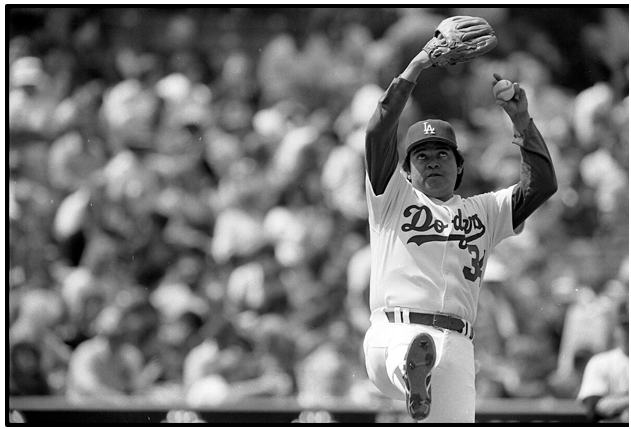
Figure 1: Source: Tony Barnard, Los Angeles Times UCLA. Los Angeles Times Photographic Collection at the UCLA Library. Online: https://commons.wikimedia.org/wiki/File:Fernando_Valenzuela_in_wind_up_for_pitch.jpg
Fernando Valenzuela and the Hall of Fame
On November 3, 2025, it was announced that, along with 7 other players, Fernando Valenzuela is on the Hall of Fame’s Contemporary Baseball Era Committee Ballot. This comes two years after the death of Fernando Valezuela and two days after the Los Angeles won their 9th World Series on his birthday. Eight former big league players comprise the Contemporary Baseball Era player ballot, which features candidates whose primary contribution to the game came since 1980. The National Baseball Hall of Fame and Museum was established in 1936 in Cooperstown, New York. It was dedicated in 1939. As of January 2025, 351 people had been elected to the Hall of Fame, including 278 former professional players, 23 managers, 10 umpires, and 40 pioneers, executives, and organizers. One hundred and nineteen members of the Hall of Fame have been inducted posthumously. The results of the Contemporary Baseball Era Committee vote will be announced live on MLB Network at 7:30 p.m. ET on Sunday, Dec. 7.
Fernando Valenzuela’s Early Career
Without a doubt, Baseball is a game of opportunity. Younger fans may not realize how amazing Fernando Valenzula was, not only the significance he has in Mexican American community but also as a player who was destined to be a Hall of Famer. Many do not realize or want to recognize that in Fernando’s early career he was more successful than a lot of Hall of Fame pitchers. What prevented Fernando from continuing to dominate was an injury he suffered. He was never the same again. His peak performance was his first seven years from age 20-25. One could argue that Fernando didn’t even reach his all-time peak as normally many players reach it between age 27-30. This article will briefly review Fernando’s life, baseball Career and compare him to his contemporary Hall of Fame pitchers.
The Origins of Fernando: Sonora
Fernando Valenzuela origins come from humble beginnings as he was born on November, 1, 1960 in the indigenous community Etchohuaquila, in Southern Sonora, Mexico, home of the Yoreme (Mayo) Culture. Linguistic Anthropologist Jose Luis Moctezuma Zamarrón revealed that his parents spoke the Mayo language and Fernando would participate as a traditional Mayo Pascola dancer during his youth.
Fernando’s Professional Baseball Career in Mexico (1977-1979)
He started his Professional baseball career with the Mayos of Navojoa in 1977 in the Liga Mexicana del Pacífico before being transferred to Tuzos de Guanajuato of the Mexican Central League in 1978, He than played for the Leones de Yucatán in the Liga Mexicana de Béisbol where posted a record of 10-12 with an ERA of 2.49 ERA and 141 Strikeouts In 1979.
Fernando Joins the Dodgers (1980)
Fernando’s professional career caught the attention of Dodger Scout Mike Brito who was sent to Mexico by Dodger owner Walter O’Malley, who wanted to find a Mexican Star to represent the large Mexican American population of Los Angeles. The Dodgers were able to sign Fernando and assigned him to play in their minor leagues where he was taught the screwball by Chicano Pitcher Bobby Castillo, the pitch that would famously be associated with Fernando. Fernando would be called up in September of 1980 making his debut as a Relief Pitcher where in 10 games he won 2 games 0 losses and an ERA of 0.00 in 17.2 Innings Pitched. He would return to play for the Mayos de Navojoa during the winter season where he finished a record of 14 Wins and 5 loses and an ERA of 1.65. The next season would set in motion one of the influential cultural impacts not only in MLB history but both in the U.S.A. and Mexico.
Fernando’s Big Break
Dodger Manager Tommy Lasorda originally had Veteran All-star Jerry Resus start for Opening Day at Dodger stadium. However, as fate would have it, the veteran pitcher was injured, so Lasorda turned to Valenzuela. Here Fernando Valenzuela was at the biggest stage in the MLB where Veteran All Star pitchers would normally start the season, pitchers like Sandy Koufax or Don Drysdale. Yet here was this unknown kid from Mexico that no one knew about. On that day (April 9, 1981), Fernando surprised everyone in the baseball world as he shut out the Houston Astros 2-0. His success continued as he had five more shutouts and 7 completed games with an ERA of 0.50, having an unbelievable record for a rookie to start season 8-0.
Fernandomania
Due to Fernando’s Mexican origin, the Mexican community of Los Angeles flocked to Dodger Stadium to see how one of their own was dominating the sport. This allowed both Chicanos (Mexican-Americans) to bond with Mexican immigrants in talking about their common heritage and baseball, creating a cultural impact on the community. Fernando wasn’t just popular in Los Angeles, his success sold tickets across the league as everyone in baseball wanted to see him. He also became an icon in Mexico and other parts of Latin America rooted for Fernando. This successful phenomenal would become known as Fernandomania.
His success sold merchandise, and media couldn’t get enough of him. It appeared that nothing could stop Fernando’s incredible year until the 1981 players strike. The strike lasted for 50 days, which would prevent Fernando from continuing his hot streak and achieving even more impressive numbers. When the strike ended, however, fans were excited to focus back to watching Fernando in action. His 1981 season ended as an All Star with a 13-7 record and 2.48 ERA with 11 Completed Games and 8 Shutouts. He would go on to earn the 1981 Cy Young award, Rookie of the Year, and he also beat the New York Yankees in Game 3 of the World Series helping his team win the next three games to win the World Series.
Fernando’s Performance in 1986
At this point some people thought Fernandomania would now end and Fernando would be a one-year phenomenon. However, this did not happen. Fernando would go on to play an additional five more All Star games. In the 1986 All Star Game, he tied a record for striking out five consecutive batters, which surpassed his 1984 personal record of striking out three consecutive batters which included Future Hall of Famers Reggie Jackson, Dave Winfield, and George Brett. He was a 21-game winner in 1986 coming in at second place for the Cy Young award. However, in 1988 he a suffered a major injury that would influence the rest of his career. Fernando would find success with achieving a No Hitter in 1990 against the St. Louis Cardinals. However the Dodger fanbase was saddened when the Dodgers released him in 1991 as they no longer considered him an effective player. He would go on to play for several other MLB teams, but was never the same as when he played for the Dodgers.
Retirement
Fernando Valenzuela would retire from the MLB in 1997. This left many fans wondering what would have happened if Fernando didn’t get injured. Many fans believe that perhaps he pitched to many innings or that his screwball pitch damaged his arm. Fernando was described as competitive because he never wanted to leave the game for the Bullpen, earning him the nickname “El Toro.” He ended his career with 113 Completed games and 31 Shutouts. He had the most shutouts of any pitcher in the 1980’s with 26. He had a total of 173 Wins – 153 Loses and an ERA of 3.54, as well as 2,074 strikeouts.
Perhaps because Fernando’s career ended quietly, people forget how effective he was in the 1980’s. Valenzuela was certainly one of the best pitchers in the 1980’s. Baseball is filled with players who had promising careers, but injuries prevented their Immortality in the Hall of Fame. Fernando Valenzuela was, without a doubt, one of those players. In his first seven years, Valenzuela outperformed several of his contemporary pitchers who are now in the Hall of Fame.
Wins Above Replacement Comparison
Wins above replacement (WAR) is a non-standardized baseball statistic developed to sum up "a player's total contributions to his team".
Here is a breakdown of the first seven years of notable contemporary Hall of Famers compared to Fernado’s first seven years:
Fernando Valenzeula MLB Years 1980-1997
1980-1986
WAR 27.9 W-L 99-68 ERA 2.94 G 210 CG 84 SHO 26 IP 1554.2 SO 1274
Steve Carlton: MLB Years 1965-1988,
First Seven Years (1965-1971)
WAR: 20.9 W-L 77-62 ERA 3.10 G 190 CG 66 SHO 16 IP 1265.1 SO 951
Don Sutton: MLB Years 1966-1988
First Seven Years (1966-1972)
WAR 22.1 W-L 102-94 ERA 3.10 G 259 CG 75 SHO 28 IP 1757.2 SO 1359
Nolan Ryan (1966-1993)
1966-1973
WAR 16.9 W-L 99-68 ERA 3.05 G 185 CG 59 SHO 15 IP 1120 SO 1205
Bert Blyleven (1970-1992)
1970-1976
WAR 43.7 W-L 108-101 ERA 2.80 G 252 CG 115 SHO 30 IP 1909 SO 1546
Jack Morris 1977-1994
1977-1983
WAR 18.4 W-L 88-64 ERA 3.67 G 197 CG 73 SHO 8 IP 1357.1 SO 765
Greg Maddux (1986-2008)
1986-1992
WAR 26.4 W-L 95-75 ERA 3.35 G 212 CG 42 SHO 13 IP 1442 SO 937
Randy Johnson 1988-2009
1988-1994
WAR 19.7 W-L 81-62 ERA 3.70 G 186 GS 186 CG 35 SHO 12 IP 1245.1 SO 1330
Tom Glavine (1987-2008)
1987-1993
WAR 19.0 W-L 95-66 ERA 3.53 G 208 GS 208 CG 28 SHO 12 IP 1357 SO 764
Mike Mussina 1991-2008
WAR 32.7 W-L 105-49 ERA 3.50 G 194 CG 31 SHO 12 IP 1362.1 SO 978
Pedro Martinez 1992-2009
1992-1998
WAR 30.7 W-L 84-46 ERA 2.98 G 218 CG 23 SHO 10 IP 1146 SO 1221
John Smoltz 1988-2009
1988-1994
WAR 19.2 W-L 78-75 ERA 3.59 G 202 CG 29 SHO 6 IP 1358 SO 1059
Legend: WAR= Wins Above Replacement; W-L (Games Won and Lost); ERA (Earned Run Average), G (Games Played), CG (Completed Games), SHO (Shutouts) IP (Innings Pitched), and SO (Strikeouts).
Fernando’s Performance
Overall, Fernando outperformed many of his contemporary pitchers all while selling out stadiums and merchandise and spreading baseball popularity in the American Southwest and Latin America. Despite the fact that Fernando never regained his success from the early 1980’s due to the injuries, he went on to pitch 173 Wins which to many critiques claim is the main reason why Fernando shouldn’t be in the Hall of Fame. However, there are other starting pitchers in the Hall of Fame who have less wins. What people do not consider is that Fernando did play at the highest level in the Mexican leagues for several years. After his 1981 CY-Young winning year, he pitched again in the Liga Mexicana del Pacífico winter league for the Mayos de Navojoa where he accomplished a No-Hitter. After his MLB retirement he played for the Naranjeros de Hermosillo from 1997-2002 and returned to played for the Aguilas de Mexicali form 2006-2007. In his three years playing for the Liga Mexicana de Béisbol (1979. 1992, 1994) he acquired 30 wins. His stats for the Liga Mexicana del Pacífico are difficult to find, but we do find that he won 14 with the Mayos in 1980-1981 and 6 in the 2006-2007 season with Aguilas.
So professionally Fernando Valenuela indeed has over 220 Wins, most likely over 230 with his time on the Naranjeros. However, for many MLB fans, they do not consider stats from outside leagues to be considered for Hall of Fame Membership. However, I argue, other leagues are just as competitive. One should consider the success of Japan in the World Baseball Classic and Mexico having a better record against the USA in the tournament. In addtion, this shows how much Fernando put into the game and loved it, which should be considered. Fernando Valenzuela could have been like most players and simply not play in the winter or after his MLB retirement. He became a member of the Hispanic Heritage Baseball Museum Hall of Fame in 2003, the Caribbean Baseball Hall of Fame 2013. Mexican Baseball Hall of Fame in 2014. As a matter of fact, the Dodgers retired his jersey number in 2023. He was a coach for Mexico in the World Baseball Classic in 2006, 2009, 2013, and 2017. He also served as member of the Dodgers broadcast team from 2003 to 2024.
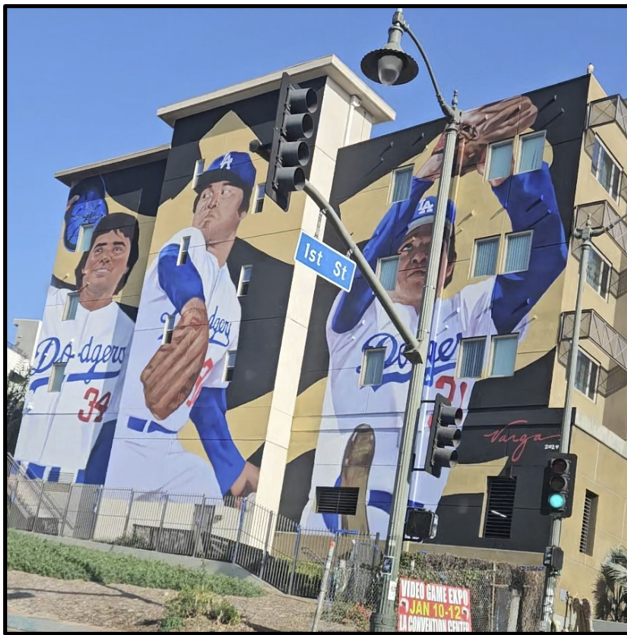
Figure 2: Fernando Valenzuela Mural by Robert Vargas located at 1781 1st St, Los Angeles, CA 90033 (Photo taken by Jonathan Rodriguez).
Fernando Valenzuela is also credited with helping many Mexican Americans to heal from the forceful removal of the Mexican American community who remained at Chavez Ravine before the construction of Dodger Stadium; yet there are still those who haven’t forgiven the actions of the City of Los Angeles which started in 1949 and eventually allowed the Dodgers to start to build the stadium in 1958. The Dodgers are forever indebted to the performance of Fernando Valenzuela as the Dodgers remain a popular team in Mexico, and much of the fanbase is of Mexican descendant. Multiple events are held at Dodger stadium to honor Mexican heritage. Fernando Valenzuela is an icon for baseball. He broke the glass ceiling and was a workhorse for the Dodger pitching staff and became a hero for millions across the US, Mexico and Latin America.
This year’s Hall of Ballot is filled with many worthy considerations, and Fernando Valenzuela is certainly deserving for the consideration, based on his contribution to the game both as a player, cultural icon, and an ambassador. If there was no Fernandomania baseball would be very different to what it is today. Viva Fernando Valenzuela!
Bibliography
Gura García. “Fernando Valenzuela Y Su Paso Por La Liga Mexicana de Béisbol: ¿En Cuáles Equipos Jugó?” La Opinión, 24 Oct. 2024, laopinion.com/2024/10/24/en-cuales-equipos-de-la-liga-mexicana-de-beisbol-jugo-fernando-valenzuela/. Accessed 6 Nov. 2025.
Baseball Reference. 2000. “MLB Stats, Scores, History, & Records | Baseball-Reference.com.” Baseball-Reference.com. 2000. https://www.baseball-reference.com/.
Pericos de Puebla,. “VALENZUELA Y SU PASO EN LMB.” Pericos de Puebla, 24 Oct. 2024, www.pericosdepuebla.com/post/valenzuela-y-su-paso-en-lmb. Accessed 6 Nov. 2025.
“30 for 30" Fernando Nation.” ESPN, 2010.
“Fernandomania @ 40.” Los Angeles Times, 2023, www.youtube.com/watch?v=4dcvx9i-ahg.
El Sol de Hermosillo. “Fernando Valenzuela: Los Orígenes de Una Leyenda En El Béisbol Sonorense.” Oem.com.mx, El Sol de Hermosillo | Noticias Locales, Policiacas, sobre México, Sonora y el Mundo, 23 Oct. 2024, oem.com.mx/elsoldehermosillo/deportes/fernando-valenzuela-los-origenes-de-una-leyenda-en-el-beisbol-sonorense-13123644. Accessed 6 Nov. 2025.