

Articles
Mexican States
Southwest United States
Heritage and Governance

Indigenous Puebla: Land of the Náhuatl Speakers
There is strong evidence that Puebla has been inhabited for a long time. In fact, the skull of the Texcal Man — which was found in a cave near Tehuacán in southeastern Puebla — has been dated at 7,480 years old. For the past millennium, several cultures — including the Olmec, Toltec, Náhuatl, Popoloca, Totonac, Mazatec and Otomí cultures — have thrived in the region that is now called Puebla. However, by the 15th Century, the Náhuatl-speakers of the Aztec Empire conquered nearly all of Puebla and ruled it until the coming of Hernán Cortés and the Spaniards. When the Spaniards destroyed the mighty Aztec Empire, the empire’s Puebla territories devolved into the hands of the Spanish Empire.

Indigenous San Luis Potosí: The Land of the Huastecos and Náhuatl
The land-locked state of San Luis Potosí (SLP) is located in center- north Mexico. With a surface area of 61,137 square kilometers (representing 3.1% of the total area of the Mexican Republic), San Luis Potosí touches nine other Mexican states.

Indigenous Nuevo León: A Region of Small, Mutually Antagonistic Tribes
Some historical sources have referred to four primary indigenous groups inhabiting Nuevo León at the Spanish contact in the late 1500s. They included the Alazapas in the north, the Guachichiles in the south, the Borrados in the east and Coahuiltecans in the west. In essence all of these groups had ties to either the Coahuiltecans or the Tamaulipec bands (who were, in essence, a sub- group of the Coahuiltecans). The Coahuiltecan tribes were made up of hundreds of small autonomous bands of hunter-gatherers who ranged over eastern Coahuila, northern Tamaulipas, most of Nuevo León and southern Texas.

The Indigenous People of Central Mexico: 1111 to 1521
Each part of the Mexican Republic has a unique and fascinating history, but a great deal attention has been given to the Indian groups that inhabited central México, in particular the present-day Distrito Federal (Federal District), known more commonly as Mexico City. Nearly 500 years ago, Hernán Cortés marched his small army of Spaniards and indigenous allies inland from Veracruz to confront the might of Emperor Moctezuma in Tenochtitlán. And, as a result, a patchwork of native kingdoms became the colonial fiefdom of a European monarch (the King of Spain).

The Indigenous People of Mexico City: 1895-2010
Each part of the Mexican Republic has a unique and fascinating history, but a great deal attention has been given to the Indian groups that inhabited central México, in particular the present-day Distrito Federal (Federal District), known more commonly as Mexico City. In fact, in 2016, the Federal District’s name was changed to the State of Mexico City. Nearly 500 years ago, Hernán Cortés marched his small army of Spaniards and indigenous allies inland from Veracruz to confront the might of Emperor Moctezuma in Tenochtitlán. And, as a result, a patchwork of native kingdoms became the colonial fiefdom of a European monarch (the King of Spain).
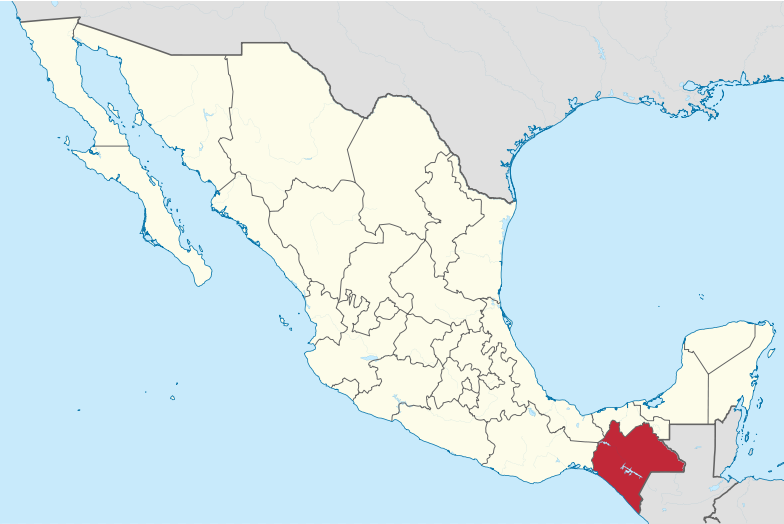
Chiapas: Forever Indigenous
In recent decades, the State of Chiapas – long a neglected and oppressed region of the Mexican Republic – has been thrust onto the world stage and into the media spotlight. The attention given to the political situation in Chiapas has initiated a great interest in the plight of the indigenous people of that state. But an understanding of the present-day situation in this southern state requires a review of its history and its complex ethnic diversity.

The Indigenous History of Jalisco, Zacatecas and Aguascalientes
Nueva Galicia’s Indigenous People: Established in 1548, the Spanish province of Nueva Galicia embraced 180,000 kilometers and included most of present-day Jalisco, Nayarit, Aguascalientes and Zacatecas.

Indigenous Durango: Land of the Tepehuanes
The State of Durango is a landlocked state located in northwestern Mexico. As the fourth largest state of the Mexican Republic, Durango covers an area of 123,317 square kilometers and takes up 6.3% of the national territory. The state has common boundaries with Chihuahua and Coahuila de Zaragoza on the north, Zacatecas on the east and southeast, Nayarit on the southwest, and Sinaloa on the west. Politically, Durango is divided into 39 municipalities.
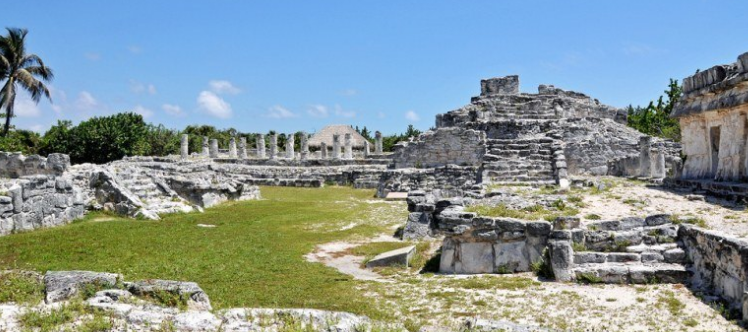
Indigenous Quintana Roo: The Last Two Centuries (Part 2)
The State of Quintana Roo lies on the eastern end of the Yucatán Peninsula in Southeastern Mexico. Quintana Roo also neighbors the Mexican States of Yucatán (on the northwest) and Campeche (on the southwest) and the nations of Belize and Guatemala (on the south). The state consists of only 44,825 square kilometers, which is equal to 2.0% of the national land mass. While the western and northern coasts of the Yucatán Peninsula are on the Gulf of Mexico coast, the eastern coast of the Yucatán — including Quintana Roo — touches the Caribbean Sea.

Indigenous Quintana Roo: From the Pre-Hispanic Period through the Colonial Period (Part 1)
The State of Quintana Roo lies on the eastern end of the Yucatán Peninsula in Southeastern Mexico. Quintana Roo also neighbors the Mexican States of Yucatán (on the northeast) and Campeche (on the southeast) and the nations of Belize and Guatemala (on the south). The state consists of only 44,825 square kilometers, which is equal to 2.0% of the national land mass. While the western and northern coasts of the Yucatán Peninsula are on the Gulf of Mexico coast, the eastern coast of the peninsula — including Quintana Roo — touches the Caribbean Sea.

Indigenous Sinaloa: From the Colonial Period to the Present (Part 2)
The State of Sinaloa, with a surface area of 58,200 square kilometers (22,471 square miles) is basically a narrow strip of land running along the Pacific Ocean and represents only 2.9% of the national territory, ranking it as the 17th largest state. Sinaloa is bordered to the north by Sonora and Chihuahua; to the south, by Nayarit; to the east by Durango, and to the west, by the Gulf of California.

Indigenous Colima: Past and Present
Colima is the third smallest of Mexico’s thirty-two states, and has a larger area than only Aguascalientes, Morelos, Tlaxcala and the Federal District. This state lies in western Mexico and is surrounded by the states of Michoacán de Ocampo on the southwest and Jalisco on the north. It also shares a 157-kilometer shoreline along the Pacific Ocean.

Estado de Mexico’s Indigenous Past and Present
The State of México is located in the center-south section of the Mexican Republic. This landlocked state has common boundaries with Querétaro de Arteaga and Hidalgo on the north, Puebla and Tlaxcala on the east, Distrito Federal, Guerrero and Morelos on the south and Michoacán de Ocampo on the west. The capital of México is Toluca de Lerdo, which had a population of 819,561 in 2010, making it the fifth largest city in the entire Republic of México.

Oaxaca: A Land of Amazing Diversity
Most Americans have heard of Oaxaca and its copious diversity. Usually this knowledge is spread by word of mouth or through informative newspaper and magazine articles. However, Mexico’s census Mexico’s Census Agency — the Instituto Nacional de Estadística y Geografía (INEGI) — known to Americans as the National Institute of Statistics and Geography — is the original source for much of the census data regarding Indigenous Mexican languages today. And this information will be outlined below.

Indigenous Jalisco: A History
Nueva Galicia’s Indigenous People
Established in 1548, the Spanish province of Nueva Galicia embraced 180,000 kilometers and included most of present-day Jalisco, Nayarit, Aguascalientes and Zacatecas. Across this broad range of territory, a wide array of indigenous groups lived during the Sixteenth Century.

Indigenous Guanajuato: Los Antepasados de Los Guanajuatenses
Guanajuato is a relatively small state – twenty-second in terms of size among the Republic’s states – with a surface area of 30,608 square kilometers of territory, giving it 1.6% of the national territory. Politically, the State is divided into 46 municipios. Guanajuato’s 2010 population was 5,853,677, representing 4.9% of Mexico’s total population and ranking six among the 31 states and the Distrito Federal.

The Native Roots of Southern Californians
On September 4, 1781, 44 pobladores (settlers) arrived at a location 9 miles west of the San Gabriel Mission to establish California’s second pueblo: El Pueblo de Nuestro Señora la Reina de Los Angles del Río de Porciúncula or The Town of Our Lady the Queen of Angeles by the River of Porciúncula. Later, the name was shortened to Los Angeles. When the 44 settlers arrived in Los Angeles, they and their families settled a short distance from a Kizh Nation village called Yang-na (now referred to as Yaanga) — now near the intersection of Alameda and Commercial Streets (south of the 101) — where 300 natives already lived.

Tracing Your Indigenous Roots in Sonora: A Challenge and an Adventure
In recent years, many Americans have taken an interest in their indigenous roots from northern Mexico. From the Late Eighteenth Century to the present, significant numbers of people from the State of Sonora migrated to Los Angeles and other areas of California.

The Caxcanes of Nochistlán: Defenders of Their Homeland
Throughout human history, many groups of people have witnessed the arrival of aliens from far away countries in their traditional homeland territories. Responses to such intrusions have varied from century to century, continent to continent and from one people to another. In most cases, the invader intruded upon the economy, the resources and the political administration of the indigenous peoples. And all too often, the invader dominates and enslaves the people. Other occupations are less dramatic.

Indigenous Baja California: The Rarest of the Rare
The Baja California Peninsula is located in the northwestern portion of the Mexican Republic. This body of land extends approximately 775 miles (1,250 kilometers) from Tijuana in the north to Cabo San Lucas in the south and is separated from the rest of Mexico by the Gulf of California (also called the sea of Cortés).
Article Categories
- Aguascalientes 14
- Arizona 4
- Baja California 6
- Baja California Sur 2
- California 20
- Campeche 4
- Census 36
- Chiapas 3
- Chihuahua 9
- Coahuila 6
- Colima 1
- Conquistador Chronicles 2
- Durango 2
- Ethnic Identity 44
- Genealogy 37
- Guanajuato 8
- Guerrero 8
- Hidalgo 2
- Indigenous Insights 101
- Jalisco 25
- Mexico City 10
- Michoacan 7
- Morelos 4
- Nayarit 3
- New Mexico 4
- Nuevo Leon 7
- Oaxaca 6
- Politics 10
- Puebla 5
- Queretaro 1
- Quintana Roo 4
- San Luis Potosi 11
- Sinaloa 6
- Sonora 16
- Southwest US 26
- State of Mexico 5
- Tabasco 3
- Tamaulipas 10
- Texas 8
- Tlaxcala 6
- Veracruz 6
- Yucatan 6
- Zacatecas 14