

Articles
Mexican States
Southwest United States
Heritage and Governance

An Indigenous Family from Ayutla, Jalisco
Exploring the genealogy of an Indigenous family in Ayutla, Jalisco, throughout the 17th and 18th centuries highlights the vital role of post-1800 baptism records from Jalisco in advancing genealogical research. Ayutla, situated within Jalisco, was home to Indigenous communities fluent in Náhuatl and Cuyuteco languages. This journey reveals intriguing patterns, where some Indigenous individuals maintained consistent surnames across generations, while others embraced surnames solely upon marriage or the birth of their children.

The Indigenous Tolentino Family of Nochistlán, Zacatecas: Seven Generations
Researching the ancestry of Indigenous families in historical Jalisco, Zacatecas, and Aguascalientes presents unique challenges. During the 17th and 18th centuries, it was common for many Indigenous People not to have consistent surnames. This inconsistency could be attributed to various factors, including changes in employment or land ownership. Unlike the Spanish who typically maintained a strong attachment to their surnames, Indigenous People often adapted or altered their surnames, sometimes opting not to use one at all. This fluid approach to naming makes tracing lineage a complex but fascinating endeavor.

Tracing Six Indigenous Generations in Lagos de Moreno, Jalisco
Tracing an indigenous family backwards in time can be an interesting challenge for the Jalisco Researcher. Many Indigenous people in the 17th and 18th Century Jalisco, Zacatecas and Aguascalientes did not even have surnames. Or they had surnames that changed from generation to the generation, possibly depending on their employer or owner of the land they lived on. In many areas, Indigenous people – for very understandable reasons – did not have the same loyalty to their surnames as Spaniards did. Hence, one surname might be discarded for another surname… or no surname at all.

The Roots of Tlaxcalan Resentment
According to Aztec legends, seven Náhuatl-speaking tribes migrated from the northwest to what is now central Mexico. One of these tribes were the Tlaxcalans. Over time, from the 1420s until 1519, another Náhuatl tribe came to dominate most of the region and developed the powerful Aztec Empire by subduing neighboring city-states.
By 1519, the Aztec Empire had become a multi-ethnic, multi-lingual realm stretching more than 80,000 square miles throughout central and southern Mexico. Living to the east of the Aztec capital Tenochtitlán, the Tlaxcalans inhabited about 200 semi-autonomous villages.

The Tlaxcalan Migrations to Northern Mexico
The year 2020 marked the 499th anniversary of the first Tlaxcalan migration of the 16th century to other parts of Mexico. Starting on June 6, 1591, selected families from Tlaxcala left their native soil to populate various locations in central and northern Mexico.
The Tlaxcalans had first assisted the Spaniards in destroying the mighty Aztec Empire in an extended campaign (1519-1521). As a reward, the Spaniards awarded the Tlaxcalans special rights and privileges. In fact, the Spanish-Tlaxcalan alliance soon evolved into a “stable, institutionalized pact” in which “Tlaxcala became a state within the empire.”

Indigenous Mexico and the Spanish Language
Today, more than 7 million of Mexico’s 126 million people speak 364 Indian linguistic variants (dialects), but almost 90% of those people are bilingual, speaking both Spanish and an Indigenous language. Those who do not speak Spanish are called monolingual.

Indigenous Sonora and the Census
When the Spaniards first reached Sinaloa and Sonora in 1531, they found indigenous people living along the coastal region. Speaking eighteen closely related dialects, the Cáhita peoples of Sinaloa and Sonora numbered about 115,000 and were the most numerous of any single language group in northern Mexico. The Spaniards called them "ranchería people.“

Indigenous Mexico in the 2020 Census: A State-by-State Analysis
Mexico’s 2020 Population and Housing Census was conducted in March 2020. More than 147,000 interviewers traveled the nearly two million square kilometers of the national territory, visiting all Mexican households to obtain information about the demographic, socioeconomic and cultural characteristics of the people of each state.

Indigenous Coahuila: Past and Present
Coahuila de Zaragoza – the third largest state of Mexico – was inhabited by six nomadic indigenous groups when the Spaniards arrived in the late Sixteenth Century: The Tobosos, Irritilas, Coahuiltecans, Rayados, Chisos and Guachichiles. The Coahuiltecans occupied a considerable part of what is now eastern Coahuila, but also occupied a large portion of northeastern Mexico and southern Texas. They were made up of hundreds of small autonomous bands of hunter-gatherers.

The Native People of Nueva Vizcaya and Nueva Galicia
The following tables contain information of the native people of the Spanish jurisdictions in Nueva Galicia, Nueva Vizcaya, Sonora and Sinaloa. These extracts primarily contain information about the indigenous groups occupying these areas at the time of the Spanish contact, the year of which varies from one place to another. However, Peter Gerhard’s book contains a wealth of local information, and it is highly recommended that interested researchers purchase the book to have access to all the information provided.

Indigenous Chihuahua: Four Centuries of Conflict
The Sierra Madre Occidental Mountains run from south of the Arizona-Sonora border southeast through eastern Sonora, western Chihuahua, Sinaloa, Durango, Zacatecas, Jalisco and farther south. The Sierra Madre Oriental Mountains run parallel to the Sierra Madre Occidental range on the eastern side of the country.

Indigenous Nueva Galicia: The Native Peoples of Jalisco and Zacatecas
Established in 1548, the Spanish province of Nueva Galicia embraced 180,000 kilometers and included most of present-day Jalisco, Nayarit, Aguascalientes and Zacatecas. Across this broad range of territory a wide array of indigenous groups lived during the Sixteenth Century. The old Aztec empire had been replaced with Nueva España.

Indigenous Oaxaca and the Census
Oaxaca is characterized by extreme geographic fragmentation with extensive mountain systems, wide tropical coastal plains and fertile valleys. The entire state is very mountainous, being crossed by three cordilleras:
1. The Sierra Madre Oriental in western Oaxaca.
2. The Sierra Madre del Sur covers 70% of the state territory.
3. The Sierra Atravesada in the region of the Isthmus of Tehuantepec.

Tracing Your Indigenous Roots in Northeast Mexico and Texas
Learn to trace your indigenous roots in northeastern Mexico and south Texas. Historian, genealogist, and author John P. Schmal will discuss the various tribal groups inhabiting this region; research techniques for finding your ancestors in this area; and helpful websites.

The Indigenous People of Northeastern Mexico: Past and Present
Today, in the northeast corner of Mexico, there are two Mexican states, Tamaulipas and Nuevo León. When the Spaniards arrived in this area in 16th Century, they were confronted by a large number of hostile indigenous tribes. Over time, the Coahuiltecans – the dominant linguistic group in the region – were weakened by epidemics, warfare, the Spanish encomienda, forced slavery, dispersion and general demoralization. With the Spaniards coming from the south and Apaches and Comanches attacking from the north, the Coahuiltecans declined significantly within the period of a century, many of them seeking refuge in the Spanish missions.

Divided Loyalties: The Indigenous Peoples Who Occupy the US-Mexico Borderlands
This presentation discusses the native groups that occupied the regions adjacent to and on both sides of the U.S.-Mexico border over the last three centuries. While some of these tribes are well-known to us today (i.e., the Yaquis, Tohono O'odham, Kumeyaay, etc.), tribal groups that have nearly disappeared as distinguishable cultural entities (i.e., Carrizos, Mansos, Jocome, Coahuiltecans, etc.) will also be discussed. In addition to the history of those tribes, we will explore the current status of some of the tribal communities that still exist today.

Indigenous Hidalgo and the Census
From 1895 to 2015, the Mexican census has painted a picture of Mexico’s people, providing details about languages spoken (Spanish, foreign and indigenous), religion, education, literacy, employment and migration. From the beginning, the Mexican census provided details about indigenous languages spoken by its citizens. However, in the first half century, it is possible that there were undercounts of indigenous language speakers because some may have failed to declare their language status for fear of affecting their position within the community. In addition, poor communications channels with rural, isolated indigenous communities may also have caused an undercount of the indigenous people.
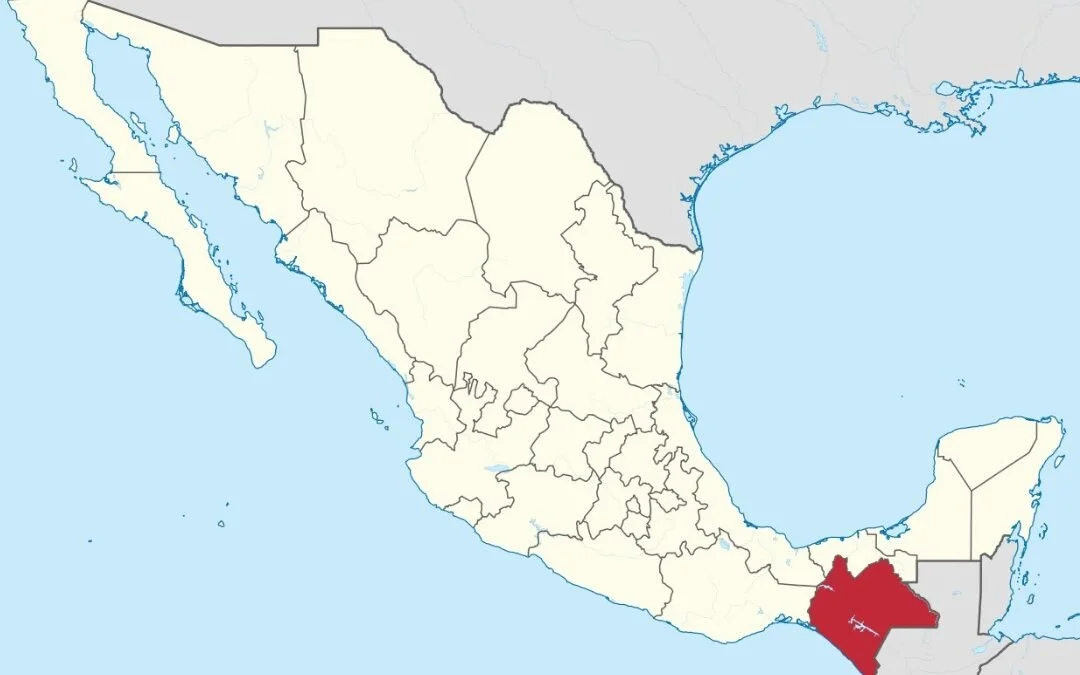
Indigenous Chiapas and the Census
From 1895 to 2015, the Mexican census has painted a picture of Mexico’s people, providing details about languages spoken (Spanish, foreign and indigenous), religion, education, literacy, employment and migration. From the beginning, the Mexican census provided details about indigenous languages spoken by its citizens. However, in the first half century, it is possible that there were undercounts of indigenous language speakers because some may have failed to declare their language status for fear of affecting their position within the community. In addition, poor communications channels with rural, isolated indigenous communities may also have caused an undercount of the indigenous people.

Exploring Jalisco’s Indigenous People: Past and Present
Today, Jalisco is the seventh largest state of Mexico with a diverse terrain that gave rise to an incredible diversity of tribal groups. Professor Eric Van Young has noted that the area of central Jalisco “supported relatively dense populations” and a “considerable ethnolinguistic variety prevailed within a fairly small geographic area.” But the expedition of Nuño de Guzmán (1529-1531) changed everything and many tribal groups were decimated during the next two decades, especially after the Mixtón Revolt (1540-1541).

Indigenous Tamaulipas: The Seno Mexicano and Nuevo Santander
The state of Tamaulipas is located in the northeastern portion of the Mexican Republic. It shares common borders with the Mexican States of Nuevo León (to the west), San Luis Potosí (to the southwest) and Veracruz (to the south). It also shares its northern boundary with Texas. On its east, Tamaulipas also has a 458-kilometer long coastline along the Gulf of Mexico.
Article Categories
- Aguascalientes 14
- Arizona 4
- Baja California 6
- Baja California Sur 2
- California 20
- Campeche 4
- Census 36
- Chiapas 3
- Chihuahua 9
- Coahuila 6
- Colima 1
- Conquistador Chronicles 2
- Durango 2
- Ethnic Identity 44
- Genealogy 37
- Guanajuato 8
- Guerrero 8
- Hidalgo 2
- Indigenous Insights 101
- Jalisco 25
- Mexico City 10
- Michoacan 7
- Morelos 4
- Nayarit 3
- New Mexico 4
- Nuevo Leon 7
- Oaxaca 6
- Politics 10
- Puebla 5
- Queretaro 1
- Quintana Roo 4
- San Luis Potosi 11
- Sinaloa 6
- Sonora 16
- Southwest US 26
- State of Mexico 5
- Tabasco 3
- Tamaulipas 10
- Texas 8
- Tlaxcala 6
- Veracruz 6
- Yucatan 6
- Zacatecas 14